Only 12 days had passed since the terrorist attacks of Sept. 11 when NASCAR arrived at Dover Motor Speedway. Nearly 3,000 people had been killed at the World Trade Center in New York City, the Pentagon outside Washington, D.C., and aboard United Airlines Flight 93 in Pennsylvania. Major sporting events around the country were postponed or canceled, including NASCAR's scheduled Sept. 16 Cup Series race at New Hampshire Motor Speedway.
That left Dover next on the schedule the following week.
NASCAR ultimately decided it was time to race again, placing Dover in the unusual position of hosting one of the first major sporting events following the attacks. College football and the NFL also returned that weekend, but the approximately 135,000 fans who packed Dover represented the largest gathering of Americans in one place since Sept. 11. The location only added to the significance. New York City was approximately 150 miles away, Washington was roughly 90 miles away and Dover Air Force Base sat only a few miles from the Speedway.
For longtime Dover president and CEO Denis McGlynn, Sept. 11 was personal as well. His brother had been working in the South Tower of the World Trade Center that morning and escaped before it collapsed.
There were also legitimate concerns about bringing more than 100,000 people together so soon after the attacks. Security procedures changed dramatically. Personal coolers — long a familiar part of attending a NASCAR race — were prohibited, and local and federal authorities worked with Speedway officials as Dover prepared for a crowd of approximately 135,000.
For McGlynn and the Dover staff, those preparations came with an uncertainty unlike anything they had encountered before.
“Apprehension is probably as good a word as you can find,” McGlynn recalled. “No one knew what to expect. We had just seen some pretty horrifying things on TV and the last thing we wanted was something like that to happen here.”
Jeff Burton remembered discussing with his wife whether she should even attend the race that weekend.
“There was a major fear,” Burton later recalled. “There was a major safety concern. There was a major security concern.”
NASCAR President Mike Helton understood the same reality.
“My gosh,” Helton remembered thinking. “If you were looking for a big crowd, here it is.”
While NASCAR and Dover focused on security, race sponsor MBNA wanted the weekend to reflect what the country was feeling. Company officials decided they wanted to place an American flag in the hands of nearly every fan who entered the Speedway.
That created a challenge of its own. American flags were in enormous demand throughout the country following Sept. 11, and MBNA needed close to 150,000 of them in a matter of days.
Steve Cochran, then MBNA's senior vice president and director of motorsports marketing, eventually reached the American Legion and learned it had approximately 75,000 flags available. MBNA purchased them all, then contacted the manufacturer and secured approximately 75,000 more.
By race weekend, roughly 150,000 American-made flags had made their way to Dover.
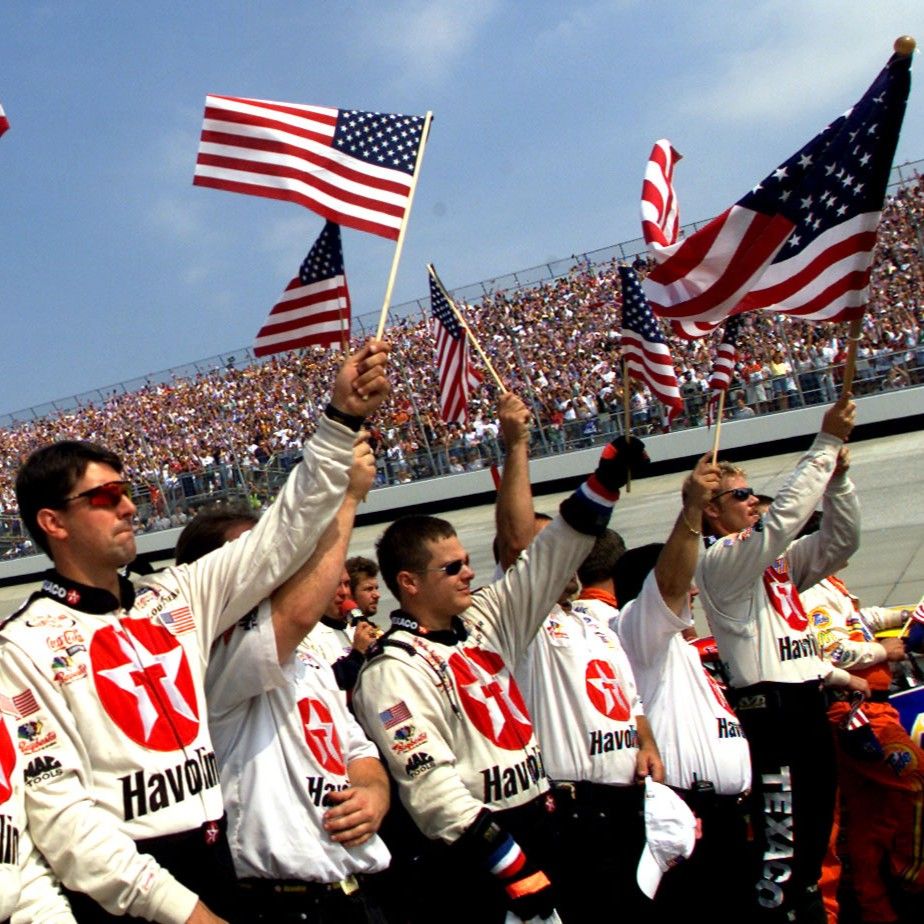
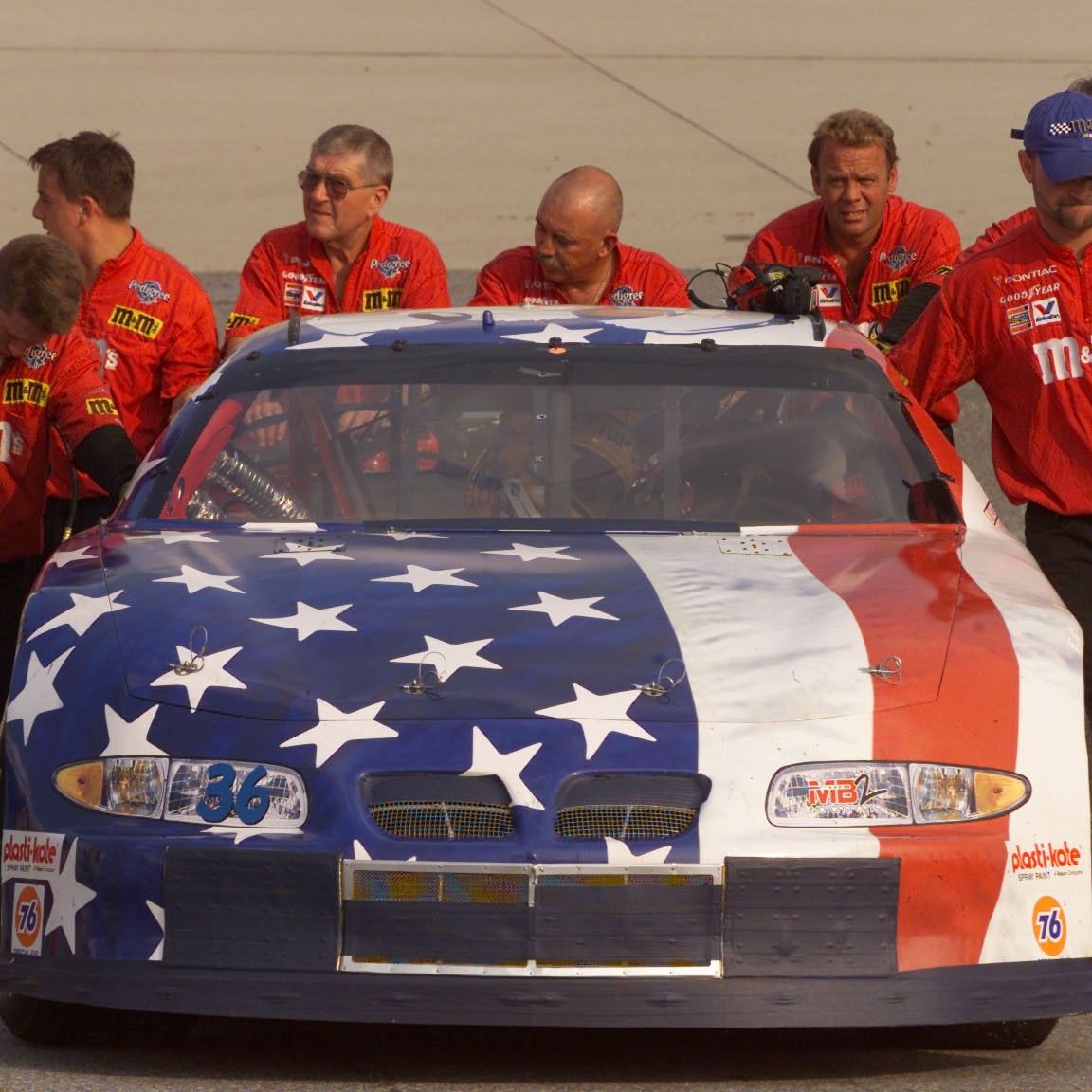
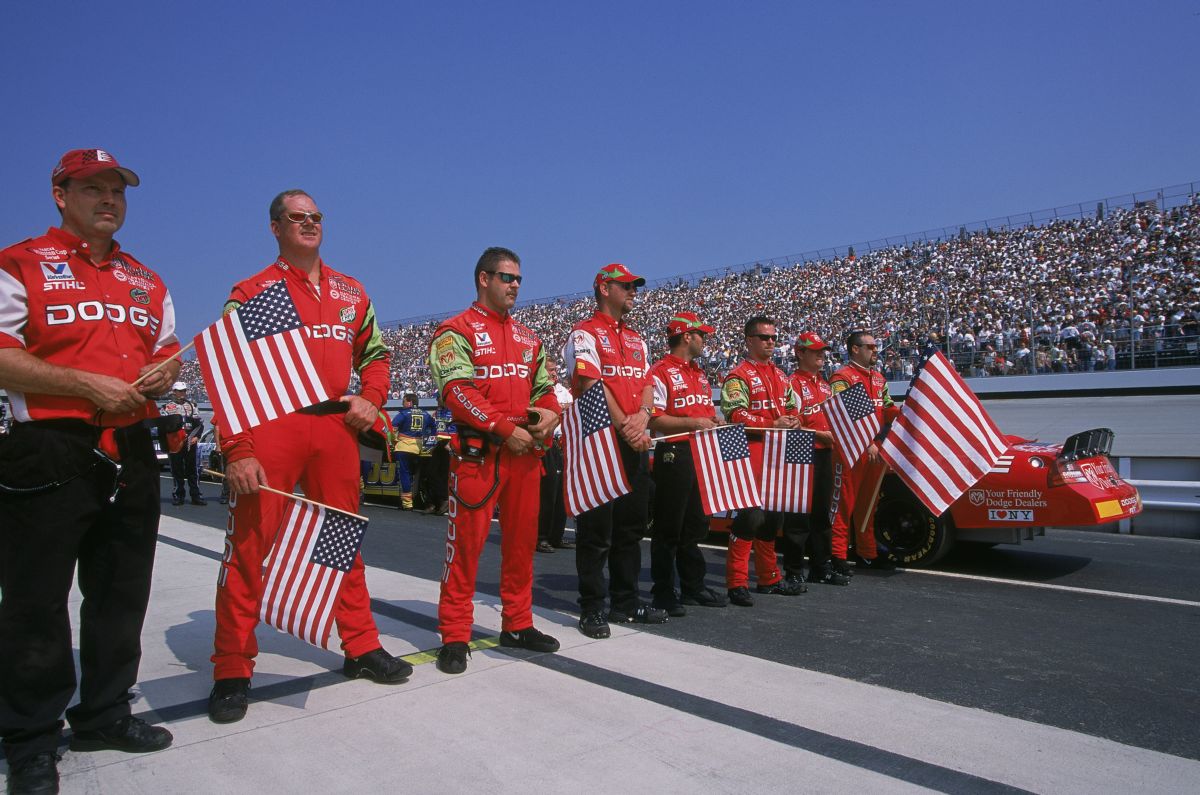
The teams joined in as well. Patriotic decals, American flags and special paint schemes appeared throughout the garage, changing the look of a NASCAR weekend that had suddenly become about far more than the race itself.
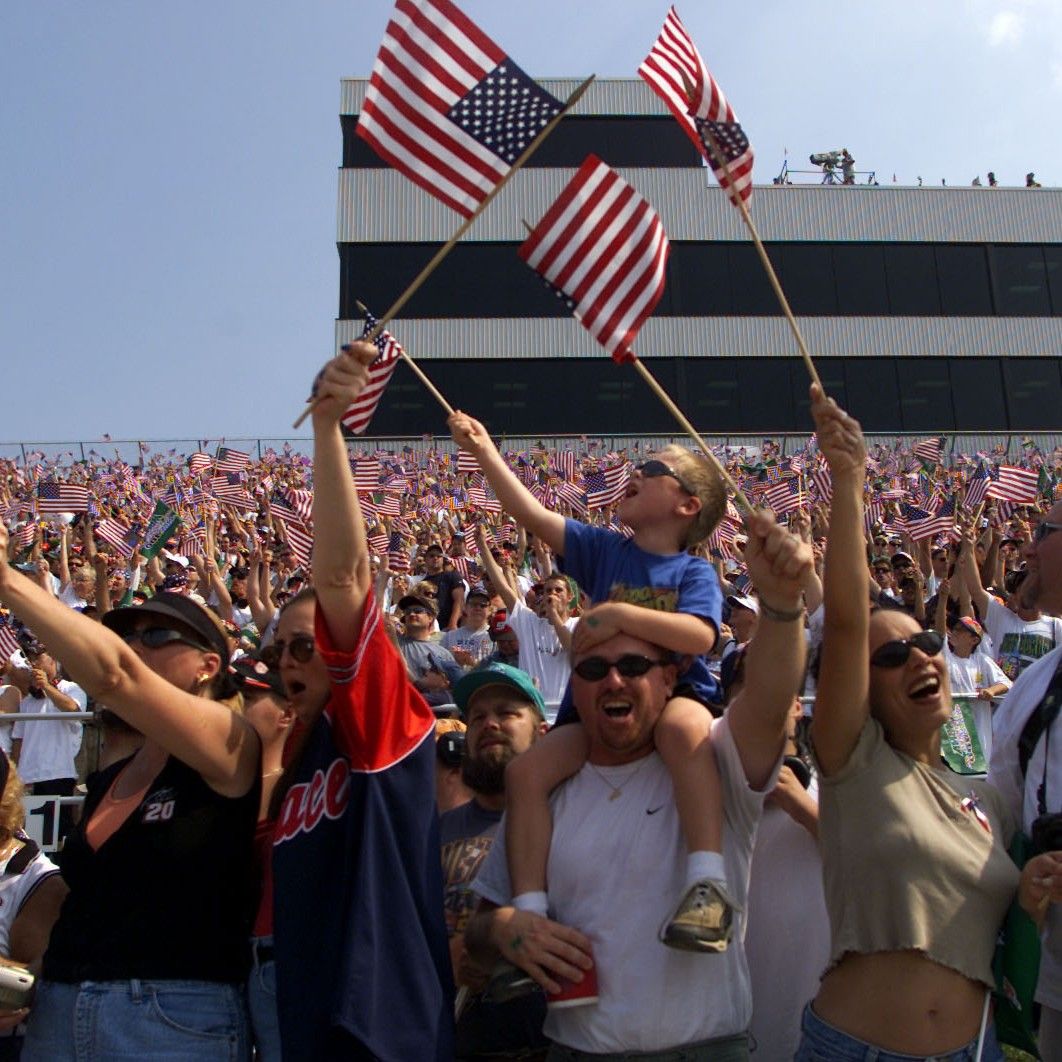
When Sunday arrived, the fans came. Approximately 135,000 people filled the grandstands surrounding Dover's one-mile concrete oval. Many entered carrying their own flags. Thousands more received one as they passed through the gates.
Burton remembered how loud the Speedway was before the race even began.
“The place was freaking rocking,” he said. “There were so many people banging on the bleachers you wondered, are these damn bleachers going to hold up to this?”
American flags filled the grandstands, and chants of “U-S-A! U-S-A!” moved around the Speedway. McGlynn remembered looking across the track and seeing red, white and blue nearly everywhere.
“Maybe unity,” he later said when trying to describe the feeling. “Pride in the country.”
Cal Ripken Jr., who was nearing the end of his Hall of Fame baseball career, had already been scheduled to serve as grand marshal for the MBNA Cal Ripken Jr. 400. What had been planned as a celebration of Ripken took on an entirely different tone after Sept. 11.
“There was an overwhelming feeling of patriotism from the start,” Ripken remembered. He recalled thousands of flags waving and sustained USA chants throughout the pre-race ceremonies. “It gave us chills.”
The national anthem carried a different weight that afternoon. Dale Earnhardt Jr. remembered looking into the grandstands and seeing the emotion in the crowd.
“There was a lot of emotion and everyone in the crowd was angry and proud,” Earnhardt later recalled. During the anthem, he said, “it just gave you chills.”
Country music star Tanya Tucker sang “God Bless America” and the national anthem, while Lee Greenwood performed “God Bless the U.S.A.” Dave Elgena, then an MBNA executive, later described the atmosphere as a “building crescendo.”
The emotion carried all the way to the start of the race. When the 43 Cup Series cars fired their engines and began circling Dover behind the pace car, longtime Speedway public relations executive Mike Thiel remembered hearing something unusual - he could hear the fans over the cars.
The USA chants continued through the pace laps as thousands of flags waved above the grandstands. Ripken climbed into the flagstand and waved the green flag, officially sending NASCAR back to competition for the first time since the September 11 attacks.
“The race starts, and it's a race,” Earnhardt later said.
Drivers focused on their cars. Crew chiefs worried about adjustments and pit strategy. Fans followed the battle for the lead. For several hours, people were able to focus on racing again.
“We need to get back to racing,” Earnhardt remembered thinking. “People need to be here and see something and have something to smile about.”
Few drivers understood the emotion of the 2001 season better than Earnhardt. Seven months earlier, his father, seven-time Cup Series champion Dale Earnhardt, had been killed on the final lap of the Daytona 500. Junior was just 26 years old and already one of NASCAR's biggest stars, carrying the Earnhardt name while grieving his father in public.
In July, Earnhardt Jr. returned to Daytona and won the first Cup Series race held there since his father's death, producing one of the sport's most emotional victories.
Less than three months later, NASCAR returned after another tragedy, and once again, Junior was at the front.
Earnhardt led 193 of 400 laps and ultimately took the checkered flag ahead of Jerry Nadeau. The victory was his second of the season and his first at Dover.
For Helton, there was something fitting about who had won.
“For him to win that day,” Helton later said, “it just seemed a bit ironic, a bit poetic, a bit romantic, a bit, just, everything you could attach an emotion to.”
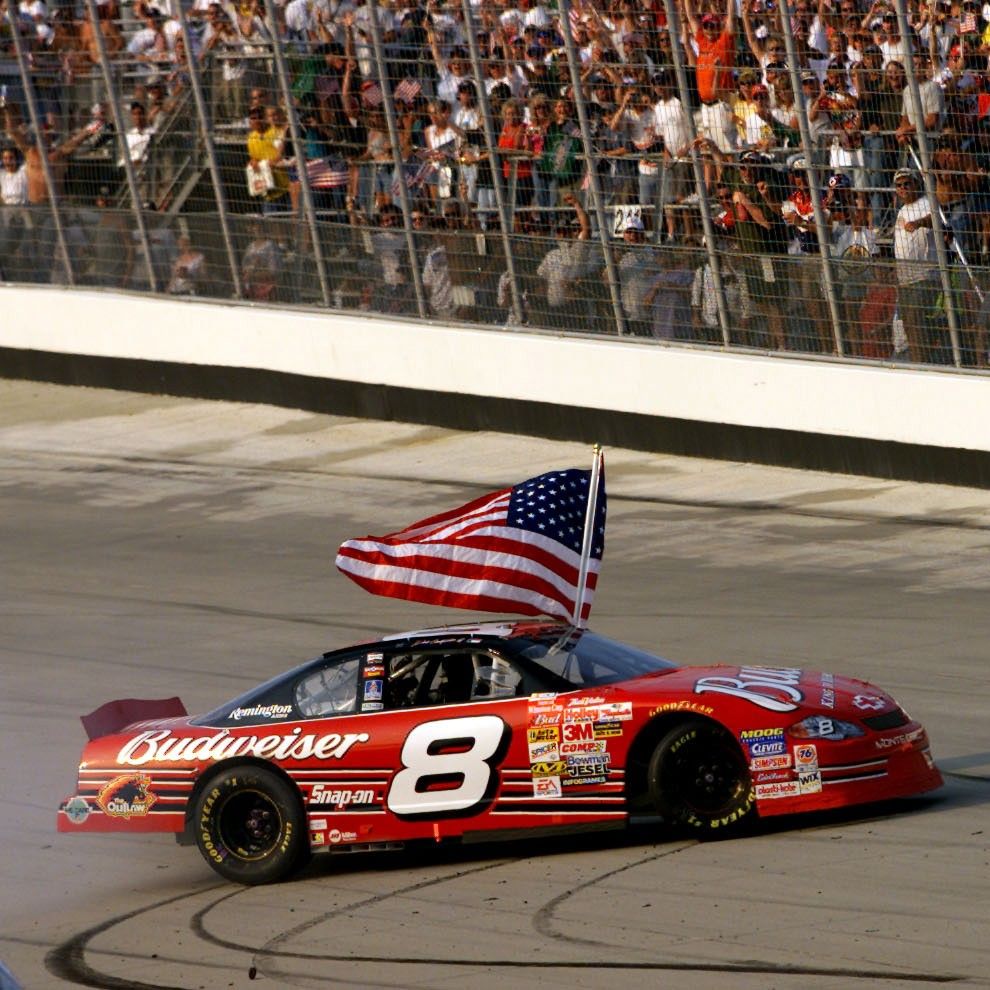
After the finish, Earnhardt's team got an American flag to him. Junior turned the No. 8 Chevrolet around and drove a Polish victory lap around Dover, holding the flag outside the driver's-side window as he passed the same grandstands that had been filled with them throughout the afternoon.
“[I'm] glad I could be the guy to win the race so I could carry the American flag around there,” Earnhardt later said. “It made me feel good.”
The race did not erase what had happened 12 days earlier. No sporting event could. But approximately 135,000 people still came to Dover. They gathered together at a time when doing so carried a new kind of uncertainty. They waved American flags, sang, chanted, cheered and watched a NASCAR race.
And at the end of the afternoon, Dale Earnhardt Jr. carried the American flag around The Monster Mile. Twenty-five years later, those who were there still remember what it felt like.